Course It

Say you know how to do something other people want to learn. Maybe baking bread that keeps for a week, maybe running a small team without losing anyone along the way. The moment you decide to pass it on, the first question arrives: in what shape.
There are a few familiar answers. Each of them is genuinely good, and what sets them apart is what the learner does with the knowledge after they get it.
Book
The book is still here. In a 2021 Pew survey, 75% of US adults said they'd read a book in the past year, in any format. That number has barely moved since 2011.1
A book gives knowledge depth and order. You read at your own pace, go back a page, mark it in pencil. And most of the way, you're on your own.
Podcast
A podcast goes where a book can't: the commute, the walk, the dishes. According to Edison Research, in 2025, 55% of Americans 12 and up consumed podcasts every month. That's the survey's high.2
The voice stays with you, and the connection builds slowly, episode by episode. The hard part is practice. What you hear on the way, you don't do in the moment.

Workshop
A workshop has a room, people, and questions answered on the spot. The room does part of the work. Looks, conversation, a mistake you fix together: no other format can recreate that.
And when you leave the room, the workshop ends. What stays is whatever you managed to practice inside.

One-on-one
Here's a famous number. In 1984, Benjamin Bloom summarized studies comparing a regular class with learning from a personal tutor. The average tutored student scored above 98% of the regular class.3
Bloom himself called it a "problem". Tutoring works best, and it's too expensive to give to everyone.
Course
A course borrows from all of them. Order from the book, voice from the podcast, hands from the workshop. And what it can't take from one-on-one, it tries to make up with a task at the end of every chapter.
On the hands part, there's a big study. In 2014, researchers pooled 225 studies of university courses in science, technology, engineering and math. In courses where students did things in class, 21.8% failed on average, and in a regular lecture 33.8%.4
Every format is good at something. The question is what your learners need to do afterwards.
The other side
Bloom's number gets quoted a lot, so it got checked too. In 2011, Kurt VanLehn reviewed studies from 1975 on. He found the advantage of a personal tutor is real, but less than half of what Bloom described.5
The course study has its limits too. It's about university classrooms, not all knowledge. Some knowledge belongs in a book, and some conversations only a workshop can create.
Our take
Choose the format by what the learner needs to do.
When what you know is something people do, the learner needs to hear you, see you, and try it themselves. For that, a course is the closest shape.
What this says about you
One question before you choose: what will the learner do tomorrow morning with what they learned?
If the answer is think, a book or a podcast will do it beautifully. If it's do, they need a place to practice. And someone who's walked that way before.
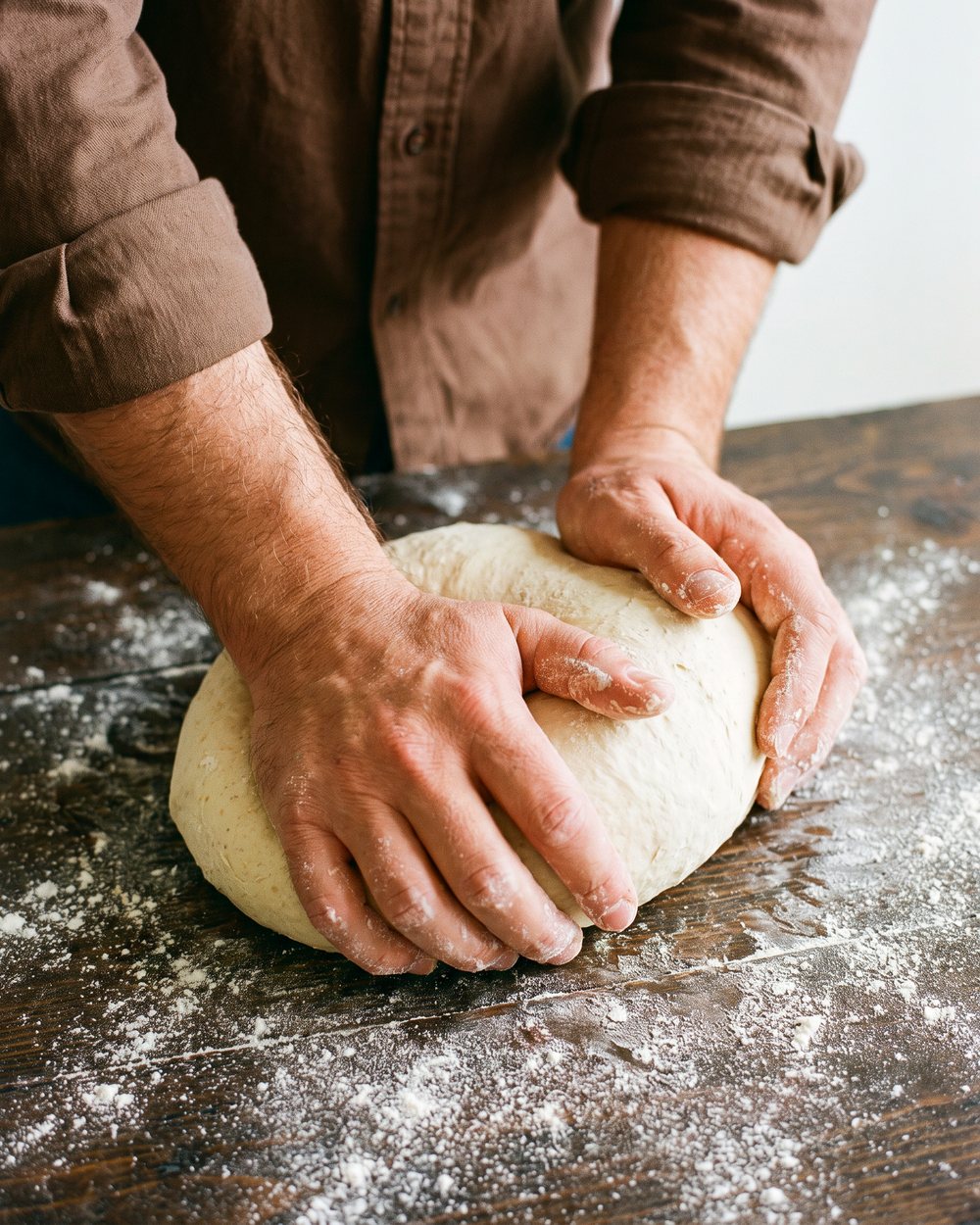
Back to the bread that keeps for a week. You can write a lovely book about it. The dough, in the end, someone has to knead themselves.
Sources
- Pew Research Center, "Three-in-ten Americans now read e-books", January 6, 2022. ↗
- Edison Research, "The Infinite Dial 2025", March 21, 2025. ↗
- Benjamin S. Bloom, "The 2 Sigma Problem: The Search for Methods of Group Instruction as Effective as One-to-One Tutoring", Educational Researcher 13(6), 1984. ↗
- Scott Freeman et al., "Active learning increases student performance in science, engineering, and mathematics", PNAS 111(23), 2014. ↗
- Kurt VanLehn, "The Relative Effectiveness of Human Tutoring, Intelligent Tutoring Systems, and Other Tutoring Systems", Educational Psychologist 46(4), 2011. ↗