Course It
Two courses on the same platform. Both taught by senior faculty at leading research universities.
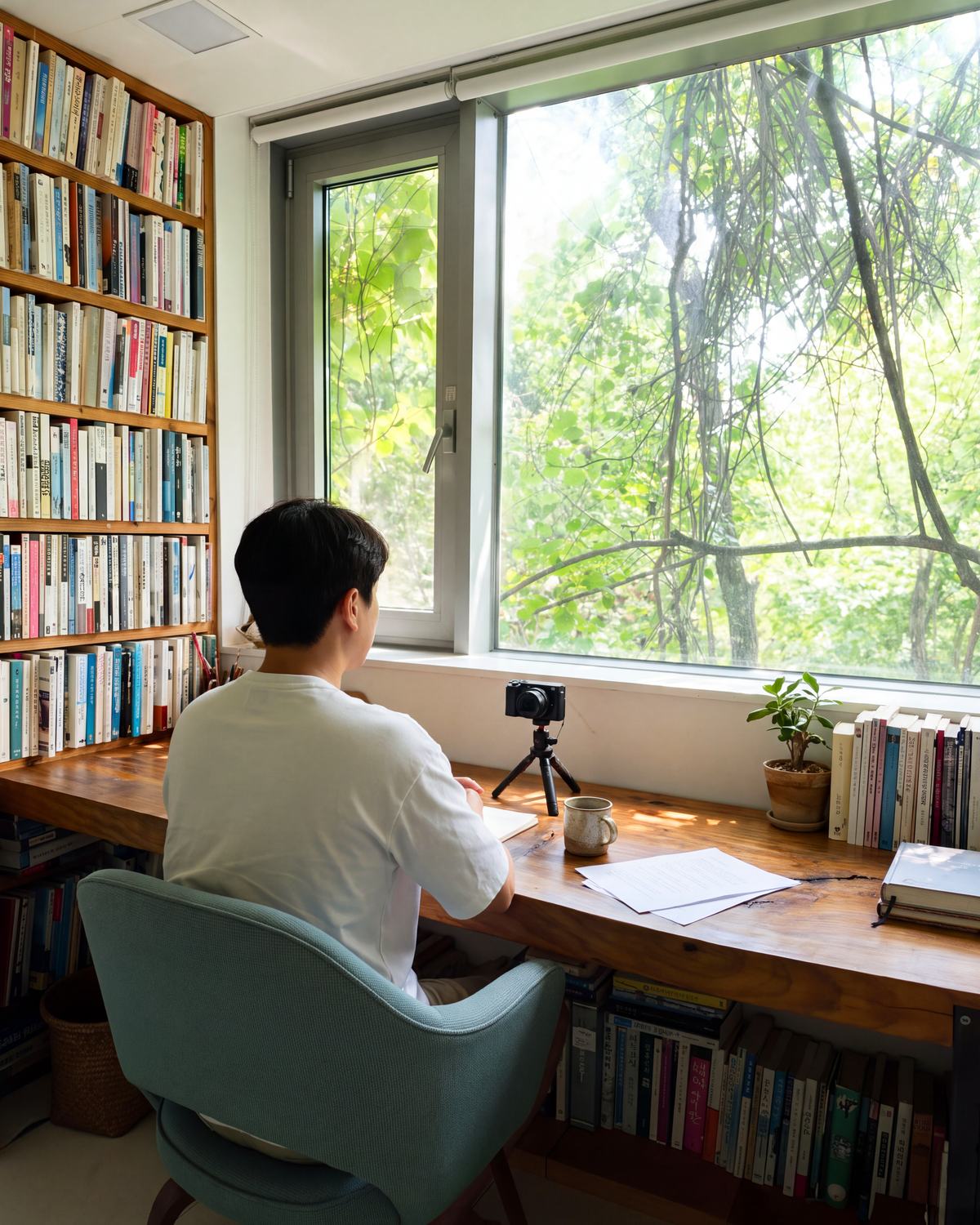
The first was filmed at an office desk, with one close camera, and the instructor sits and looks straight into the lens. The second was filmed in a multi-million dollar TV studio, with a lecturer standing behind a podium.1
Viewers stayed longer with the first. On 6 to 12 minute videos, nearly twice as long. On longer ones, nearly three times.
What the camera saw
The study came out in 2014. Philip Guo and Juho Kim of MIT and Rob Rubin of edX analyzed 6.9 million video sessions from four courses. They measured how long people stayed with each video, and whether they tried the exercise after it.2
When they showed the results to edX's production team, the explanation came right away. The instructor at the desk looked like someone holding office hours for one student. The lecturer in the studio was looking at the room.
The producers had a word for it: personal. The feeling that the person on screen is talking straight to you.
Decades in front of a class
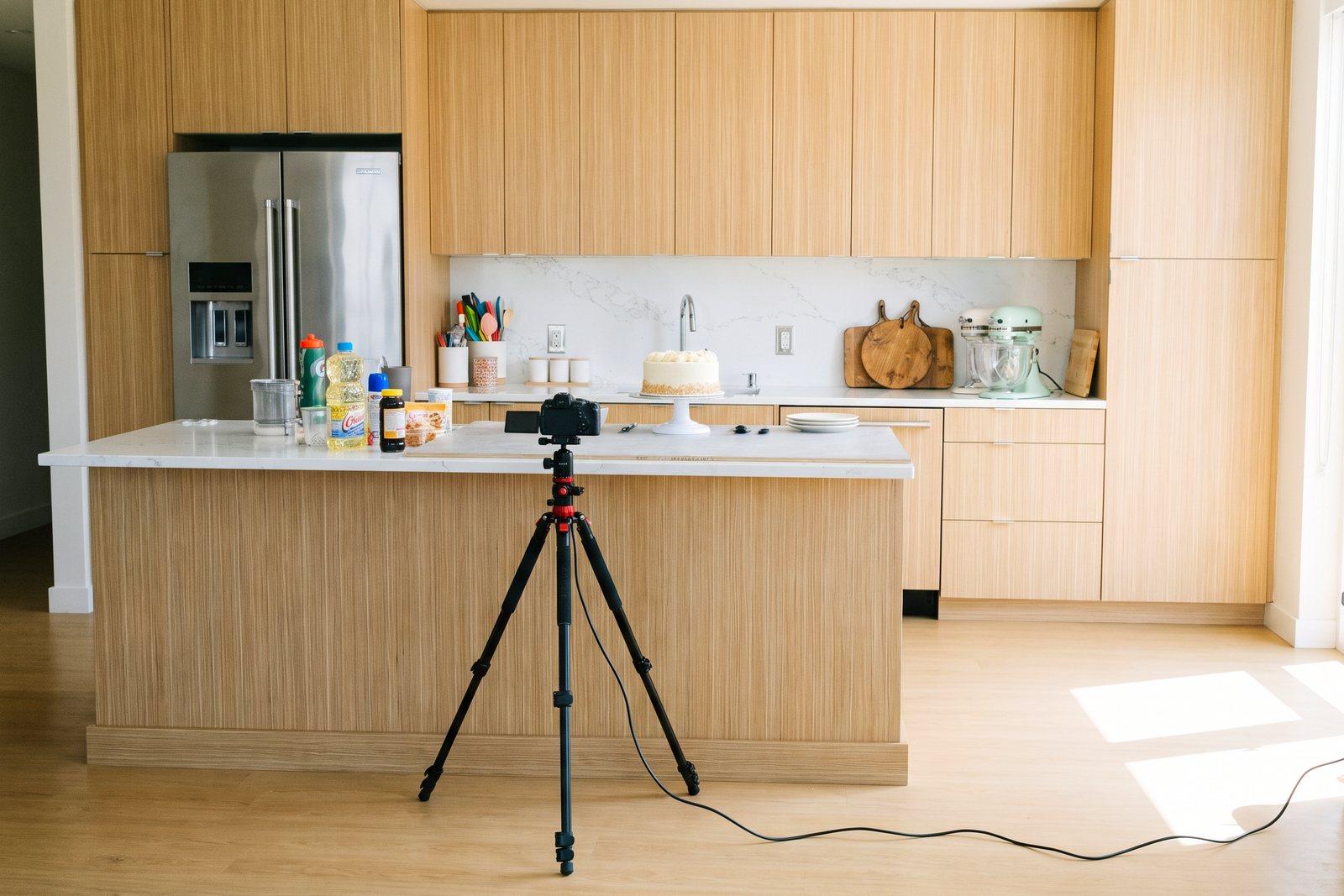
He wasn't a bad lecturer. He had decades of classroom teaching behind him, and he preferred the format he knew. The production team looked for the style he'd be most comfortable with, and he went back to the podium.
On screen, it didn't work. The researchers wrote that what works in a live classroom doesn't always carry over to video, even in an expensive studio.
One more finding. Instructors who spoke fairly fast, and with enthusiasm, held viewers longer. The researchers suggested reassuring instructors that they don't need to slow down on purpose.3
On screen, talking to one person beats talking to a hall.
What it doesn't say
The researchers say so themselves. It's hard to generalize from one pair of courses, and the difference may come from the instructors, not the studio. It was the only pair they had.
And watching longer isn't the same as learning. That same year, researchers at Stanford tested what happens when the instructor's face appears in a video: learners preferred the version with the face, and rated it as more educational. On memory tests, there was no significant difference.4
In a 2015 field study with almost 3,000 learners, more than a third chose to watch without the face. One reason they gave: not getting distracted.5

Our take
The way you talk is part of what you know.
Someone who's done something for years knows how to explain it to the person sitting across from them. That's what the camera loves.
What this says about you
If you're holding back because "I'm not a teacher", this study offers another way to see it. What worked was someone at their own desk, talking to one person, fast and with enthusiasm. Nobody there became a lecturer.
The real work happens before the camera. You pull out of what you do the things that keep coming back, again and again.6
Back to the two courses. The studio cost millions, and the podium stood in its place. Viewers stayed at the office desk.
Sources
- Philip J. Guo, Juho Kim, Rob Rubin, "How Video Production Affects Student Engagement: An Empirical Study of MOOC Videos", Proceedings of Learning at Scale (L@S), 2014. ↗
- René F. Kizilcec, Kathryn Papadopoulos, Lalida Sritanyaratana, "Showing Face in Video Instruction: Effects on Information Retention, Visual Attention, and Affect", CHI, 2014. ↗
- René F. Kizilcec, Jeremy N. Bailenson, Charles J. Gomez, "The Instructor's Face in Video Instruction: Evidence From Two Large-Scale Field Studies", Journal of Educational Psychology 107(3), 2015. ↗